There is a new kind of clutter on the modern desk.
It is not only coffee cups, charging cables, sticky notes, and the laptop that somehow became the center of the house. It is also AI chat windows, smart watches, productivity apps, digital calendars, noise-canceling headphones, AI companions, browser tabs, auto-generated reminders, and a phone that keeps lighting up like it has urgent news from every corner of the planet.
The promise was simple: technology would save time.
Sometimes it does. Sometimes it steals it in smaller pieces.
That is why this topic fits naturally with AgendaCover’s world of organization, time management, and work-life balance. The site presents itself as a resource for expert advice, tools, and tips to improve organization, time management, and a more balanced life. Its tone is practical, human, and a little honest about how messy real life can be — like that familiar moment when dinner is on the table, Slack buzzes, and your brain is still half at work.
AI has made that mess more interesting. And more complicated.
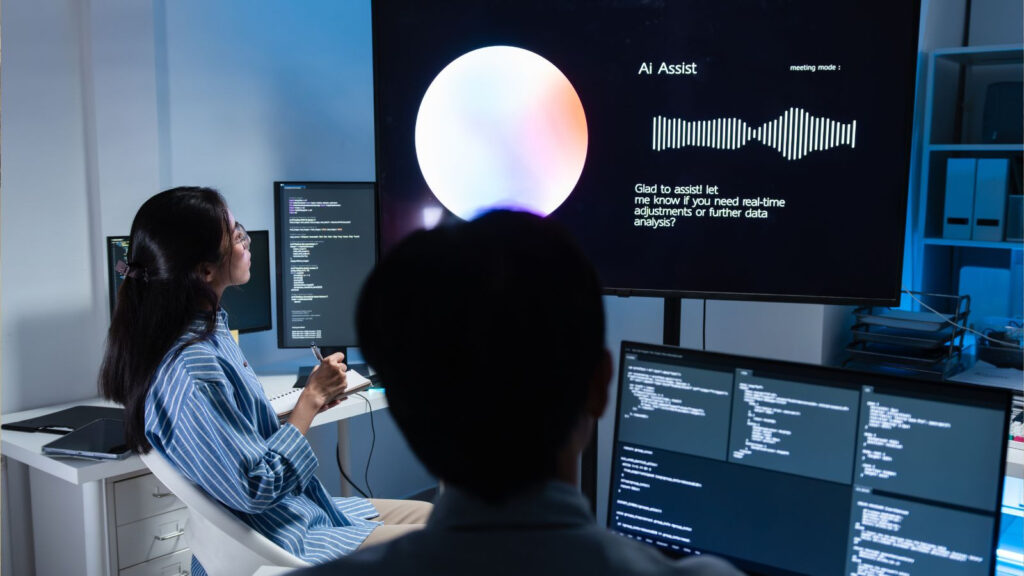
We now use AI to summarize meetings, write emails, plan trips, generate images, draft documents, organize tasks, talk through stress, build fantasy characters, and sometimes keep us company. Microsoft’s Work Trend Index describes AI and agents as part of the changing structure of work, where AI can take on more execution and humans need to decide how to use that expanded capacity.
That last part matters: decide how to use it.
Because if we do not choose our relationship with AI, gadgets, and laptop work, they will choose it for us.
The Problem Is Not Technology. It Is Boundary Creep.
Most people do not wake up and decide to ruin their work-life balance.
It happens quietly.
You answer one email after dinner. You check one AI tool before bed because you want to “finish something quickly.” You ask an AI companion for advice because it is easier than texting a real person. You open your laptop on Sunday “just for ten minutes.” You use a smart watch to track your sleep, then start feeling guilty because your sleep score is rude.
Suddenly, life is full of tools that were supposed to help, but your brain never clocks out.
AI companions make this even more delicate. For some people, they are entertainment. For others, they become a private place to talk, flirt, vent, roleplay, or feel less alone. That does not automatically make them bad. But if the AI companion becomes the easiest relationship in your life, it is worth asking why.
Pew Research Center reported that 64% of U.S. teens say they have used an AI chatbot, and about three in ten say they use AI chatbots daily. That does not mean chatbots are replacing human relationships, but it does show how normal AI interaction is becoming. Adults are not far behind. AI is moving from “tool” to “presence.”
And presence needs boundaries.
Story One: The Freelancer Who Let the Laptop Move In
Maya, a freelance designer, loved remote work at first. No commute. No office noise. No one stealing her yogurt from the shared fridge. She bought a better laptop stand, a fancy keyboard, a second monitor, and a smart lamp that changed color when she needed focus.
For a while, it worked.
Then her workday started leaking. She answered client messages at 9:40 p.m. because the laptop was right there. She used AI to generate concepts faster, which meant clients expected more versions. Her calendar was organized, but her nervous system was not.
The fix was not dramatic. She did three things.
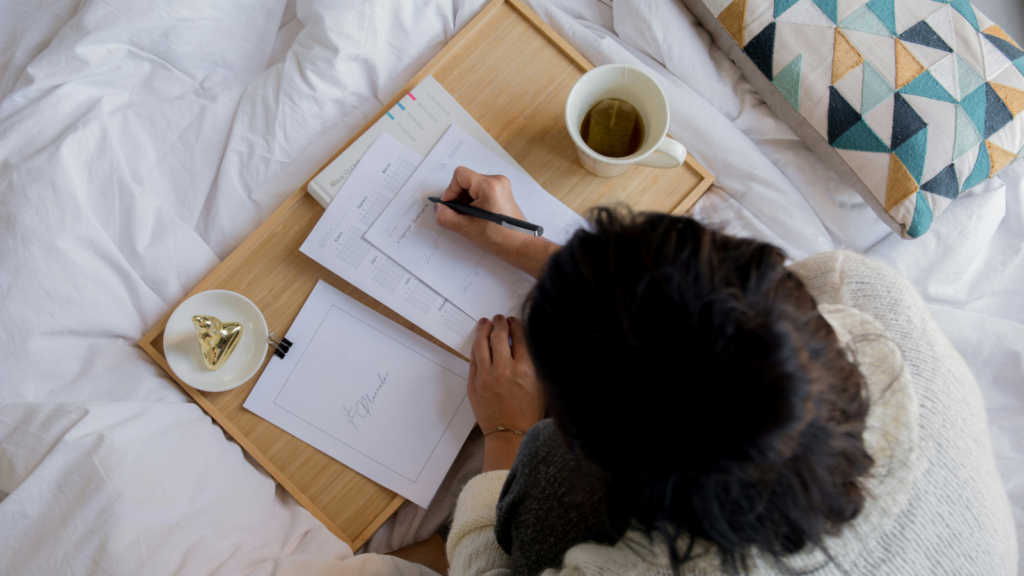
First, she created a physical shutdown ritual: laptop closed, keyboard covered, lamp off. Second, she stopped using AI after 7 p.m. unless it was for personal fun, not client work. Third, she put one analog object on her desk — a paper planner — because writing tomorrow’s top three tasks by hand helped her stop mentally working.
Within two weeks, she was not magically balanced. But dinner felt like dinner again.
That is the point. Balance is rarely a personality trait. It is usually a set of small systems.
Where Adult AI Fits Into the Balance Conversation
Adult AI tools belong in this conversation too, because work-life balance is not only about spreadsheets and Slack. It is also about private digital habits.
A platform or tool described as an AI Adult Image Generator may be part of someone’s private entertainment, fantasy, or AI companion use. The adult angle does not make it automatically unhealthy. The boundary question is what matters.
Is it being used privately and legally, with fictional characters or consenting adults?
Is it staying out of work devices and work hours?
Is it replacing real intimacy, rest, or sleep?
Is it creating shame, secrecy, compulsive checking, or unrealistic expectations?
Those are the useful questions.
Adult AI should never involve real people’s images without clear consent. It should also not sneak into work time, work laptops, or the same mental space where you are trying to focus, recover, or connect with actual people.
Digital freedom still needs digital hygiene.
Story Two: The Manager Who Had Every Productivity App
Jon was a team manager with a gadget for everything.
A smart ring tracked his recovery. A watch tracked his steps. His laptop had an AI assistant. His notes app generated summaries. His calendar auto-blocked focus time. His browser had extensions for writing, task sorting, tab saving, password management, meeting notes, and distraction blocking.
He was very optimistic.
He was also tired all the time.
The problem was not that the tools were bad. The problem was that every tool asked for attention. Every dashboard wanted to be checked. Every recommendation made him feel slightly behind.
So he made a rule: if a tool did not help him make a decision, it had to go.
The sleep tracker stayed because it helped him notice that late-night laptop work ruined his mornings. The AI meeting summarizer stayed because it saved time. Three productivity apps were deleted. Notifications were cut in half. His AI assistant was limited to three work tasks: summarizing, drafting, and planning.
He did not become less productive. He became less interrupted.
That is the secret nobody sells: fewer tools often create more space.
A Practical Table for Balancing AI, Gadgets, and Real Life
| Digital habit | Healthy use | Warning sign | Better boundary |
| AI work assistant | Summarizing meetings, drafting emails, organizing tasks | You use it to keep working after hours | Set an “AI work cutoff” time |
| AI companion | Entertainment, reflection, light conversation | It replaces real friends, sleep, or difficult conversations | Treat it like screen time, not emotional oxygen |
| Laptop work | Focused work in planned blocks | Laptop follows you to bed, couch, meals | Create a shutdown ritual |
| Smart watch/ring | Noticing trends in sleep, steps, recovery | You feel judged by your data | Check trends weekly, not obsessively |
| Phone notifications | Useful alerts from people and tools | Everything feels urgent | Turn off non-human notifications after work |
| Adult AI tools | Private, legal, fictional/consensual use | Shame, compulsion, work-device use, non-consensual images | Keep it private, bounded, and consent-based |
| Productivity apps | One place to capture tasks | You spend more time organizing than doing | Use one main system, not five |
Expert Rules That Actually Work
The first rule: separate tool categories.
Your AI work assistant is not your therapist. Your AI companion is not your project manager. Your laptop is not your living room. Your phone is not an emergency siren for every app on Earth.
When categories blur, balance disappears.
The second rule: give every tool a job.
Do not keep AI “just in case.” Decide what it is for. Maybe AI helps you write first drafts, summarize notes, brainstorm meal plans, or organize weekly tasks. Good. Name the job. When the job is done, close it.
The third rule: protect the first and last hour of the day.
If your first act in the morning is opening a laptop, your brain enters work before your body has arrived in the day. If your last act at night is chatting with AI, scrolling, generating images, or checking dashboards, your nervous system never gets a clean ending.
Try a simple rule: no laptop for the first 30 minutes after waking, no work AI in the last hour before sleep.
The fourth rule: use gadgets as mirrors, not masters.
A smart watch can show that you slept badly. It cannot tell the whole story of your life. A productivity app can show unfinished tasks. It cannot decide what matters most. AI can suggest a schedule. It cannot know that your kid needs you, your back hurts, or you have not sat outside in three days.
Data is useful. Wisdom is still your job.
The fifth rule: schedule human contact before digital comfort.
AI companions are available all the time. People are not. That makes AI easier, but not always better. If you notice yourself turning to AI because real connection feels inconvenient, do not shame yourself. Just add one human touchpoint back into the week: coffee, a call, a walk, a voice message, dinner without phones.
Real life needs maintenance too.
A Simple Weekly Reset
Once a week, preferably Friday afternoon or Sunday evening, ask four questions:
What did technology help me do this week?
What did it interrupt?
Which tool earned its place?
Which tool needs a boundary?
This takes ten minutes. It can save hours.
You might realize your AI assistant saved you from boring admin work. Great. Keep it. You might notice your AI companion was mostly a late-night avoidance habit. Adjust it. You might find that your laptop has become a second body. Put it away earlier.
Work-life balance is not about rejecting technology. That would be unrealistic and, frankly, not very useful. Most of us need laptops. Many of us benefit from AI. Gadgets can support health, focus, and creativity.
The goal is not less technology.
The goal is better ownership.
Final Thought
The modern work-life balance problem is not just that we work too much. It is that work, entertainment, companionship, adult content, planning, shopping, health tracking, and social life now arrive through the same few screens.
That is a lot for one nervous system.
So the new version of balance has to be more intentional. Use AI, but give it limits. Enjoy gadgets, but do not let them manage your mood. Work from your laptop, but do not let it move into every room of your life. Explore digital companions or adult AI privately and responsibly, but keep consent, privacy, and real human connection at the center.
You are allowed to use powerful tools.
You are also allowed to close them.